
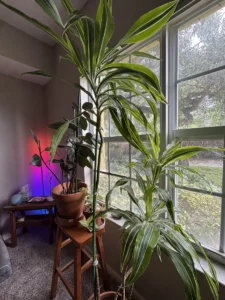
It started simply. Our dog had diarrhea in the bedroom. After trying to clean it ourselves without much success, we called in professionals. To prepare, we cleared out everything. Once the furniture was gone, only the plants remained.
I started to grow plants after reading about how they can help clean indoor air. Fascinated, I brought a couple home, and from there the collection slowly grew. What I like most is that these plants have a purpose in our household. They aren’t just decoration. They act as…
- Curtains of Light: Their leaves soften sunlight, filtering brightness into something gentler and easier to live with.
- Air Filteration: They absorb small amounts of pollutants while adding a touch of humidity to the room.
- Living Presence: They grow, shift, and change, bringing movement and a steady sense of life into the space.
Because they give something to us, I feel committed to giving something back. Keeping them healthy feels less like a chore and more like a quiet exchange—a small, symbiotic support system that ties us together.
Curtains of Light
The south-facing light comes in strong, sometimes almost too sharp. The rubber plant takes the edge off, its broad leaves breaking up the glare. The pothos trail across shelves and along the window, catching bits of sunlight in pieces, turning harsh beams into softer patterns on the walls.
The tall dracaena adds something with its height, catching and diffusing the light higher up in the room. Its long, narrow leaves spread the brightness more evenly, softening what would otherwise feel like harsh overhead sun. It changes how the whole room feels, giving balance to the lower rubber plant and the trailing pothos.
Together, the plants don’t just block light the way curtains do. They let light in while shielding enough to give privacy. The room stays bright but never exposed, and the space feels softer because the light is filtered through something alive. They thrive in the sun, and in turn we enjoy being behind them.
Air Filtration
I started growing plants after learning they could filter air. NASA’s 1989 Clean Air Study showed that species like pothos and dracaena absorb pollutants such as formaldehyde and benzene (NASA PDF). Both the leaves and the soil’s microbes helped reduce contaminants.
Later studies looked at real-world homes. A 2020 review found you’d need dozens of plants per square meter to match mechanical ventilation (PubMed). Still, researchers note plants add value in other ways: raising humidity, supporting indoor microbiomes, and reducing pollutants in smaller amounts. The effect is modest, but steady.
Rubber plant (Ficus elastica)
The rubber plant stands tall by the window, its leaves wide and glossy. Research links this species with reducing formaldehyde levels (CO2Meter).
In daily life, the difference is small, and that’s okay. The rubber plant isn’t going to transform the air on its own, but it plays a steady role when paired with good airflow. Its leaves and roots are part of the background support system in the room, doing quiet work while also giving us shade and presence. It’s less about dramatic change and more about the balance it adds to the space over time.
Pothos (Epipremnum aureum)
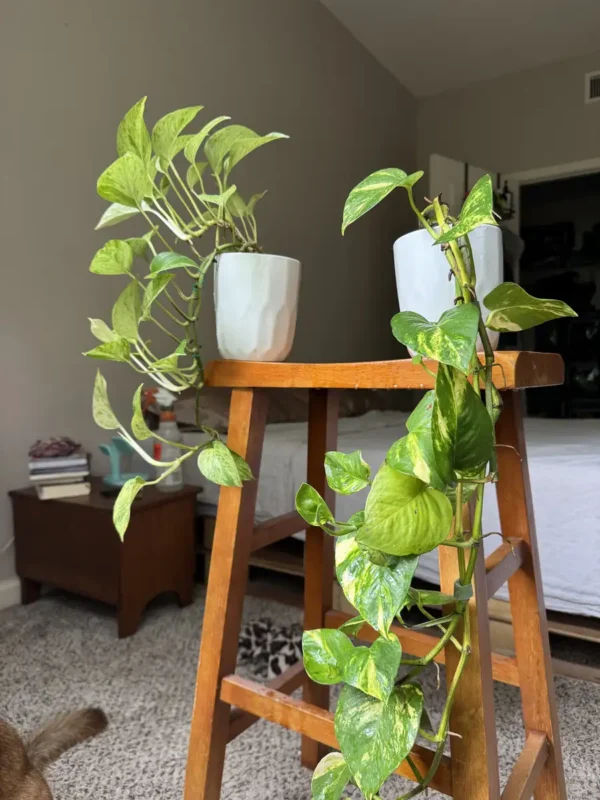
We have three varieties: Marble Queen, Manjula, and Jade. Their vines trail across each other, softening the geometry of the room.
In chamber studies, pothos reduced formaldehyde, benzene, toluene, xylene, and trichloroethylene. These findings don’t scale fully to homes, but they underline the plant’s resilience and usefulness.
Dracaena
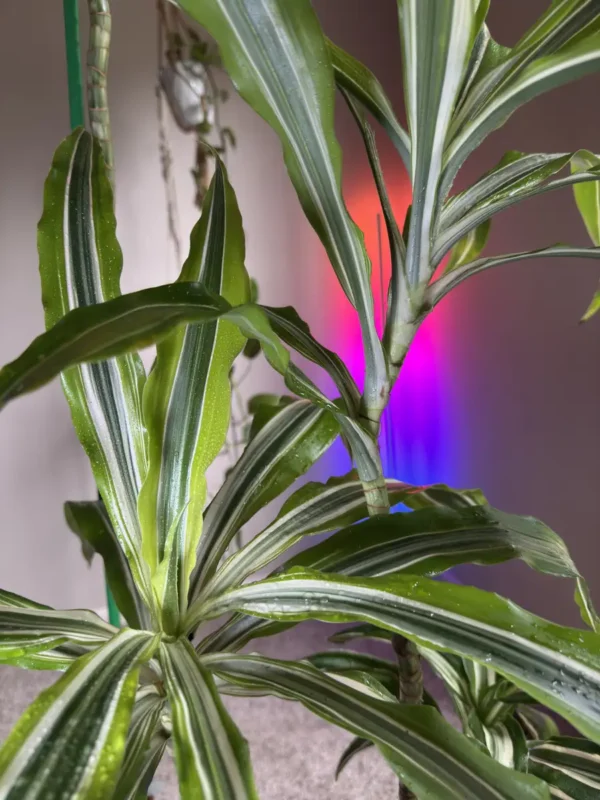
The dracaena stands upright, adding height and structure to the room. Its narrow leaves arch outward, contrasting with pothos vines and rubber leaves.
Lab research has shown dracaena species to be effective at removing formaldehyde, benzene, toluene, xylene, and trichloroethylene (Air Oasis). In one chamber study, dracaena compacta removed 96% of formaldehyde within 24 hours. At home, results are less dramatic but still meaningful when paired with ventilation.
Living Presence
Living with plants feels different than living with objects. They grow, shift, and change, adding a steady rhythm to the room. The rubber plant stretches a little taller each season, the pothos send out new vines, and the dracaena slowly unfolds its long, narrow leaves. These small changes make the space feel alive in ways furniture never could.
I don’t consider myself someone with a “green thumb.” I just appreciate the work these plants quietly do and want to keep them as happy as possible. They help us—filtering light, supporting the air, shaping the room—and in return I do my best to care for them. It feels mutual, like we’re looking out for each other in simple ways. That sense of exchange is what makes them companions rather than decorations.
Conclusion
When the room was stripped bare, the plants stayed. They softened the light, added balance, and reminded us of their quiet work. They don’t do everything, but what they offer is enough—shade, small air support, and a steady living presence.
Caring for them feels less like a task and more like an exchange. They help us, and we help them. That rhythm—slow, patient, and mutual—is what makes them more than decoration. They’re companions, shaping space and reminding us that life feels fuller when we share it with living things.
 Sansefuria