
I’ve had my Dracaena Lemon Lime and White Jewel for about seven years now. They live together in one pot by the window in my bedroom, and I still find myself admiring them almost daily. They’ve moved with me from Baltimore to Florida, spent time in my office during COVID (the light was better there than at home), and have been present through countless quiet moments of growth. It’s wild to think how time and event passed with these plants.
There’s something about these two that feels perfectly balanced. The Lemon Lime brings the energy—its vivid neon green and yellow stripes catch your eye from across the room. The White Jewel, on the other hand, is subtler and more refined, with crisp white striping that looks almost painted on. One’s a sunrise, the other a moonbeam.
Dracaena Lemon Lime: A Burst of Color
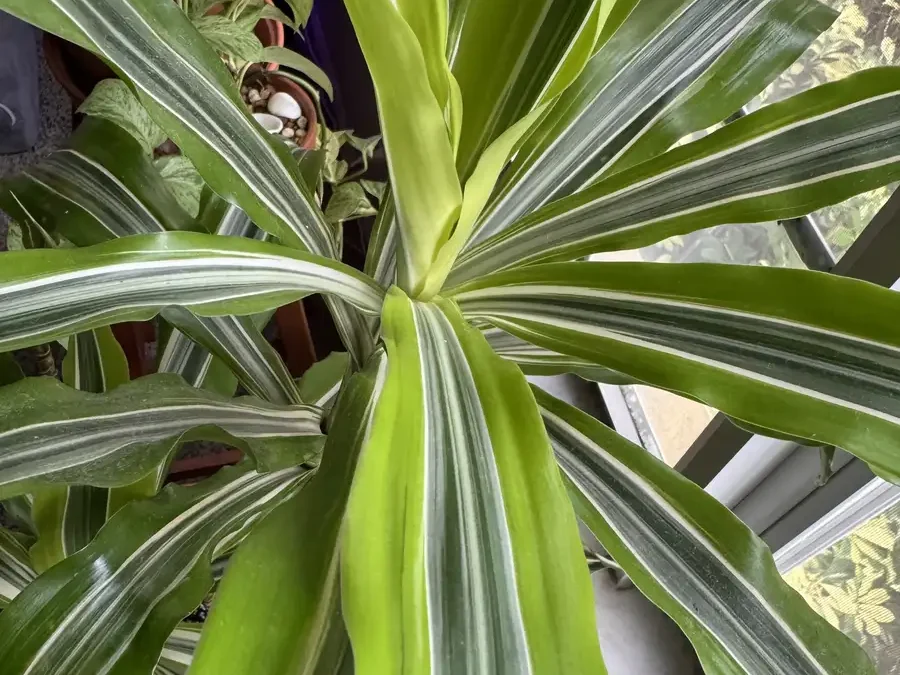
Native to the lush tropical regions of Central and West Africa, particularly Cameroon and Uganda, Dracaena fragrans—the botanical ancestor of the Lemon Lime cultivar—has long been admired for its endurance and adaptability. In the wild, it can grow as a small tree beneath the forest canopy, reaching heights of up to 15 feet (4.5 meters). Filtered light and high humidity promote slow but steady growth. Across several African cultures, the species holds spiritual significance. In Cameroonian and Congolese traditions, Dracaena plants are often placed near homes and entryways as protective symbols—believed to ward off misfortune and promote peace. In other regions, parts of the plant are used in medicinal or ceremonial practices, tying it to community wellness and ancestral reverence.
The Lemon Lime cultivar, developed for its vivid, ornamental foliage, brings that legacy indoors. Its lime-yellow leaf margins and glossy green centers add a bold splash of color that feels both electric and balanced. Indoors, it typically grows to about 3 to 4 feet (90 to 120 centimeters) in height, thriving even in medium to low indirect light. Its growth is steady and confident—an echo of its tropical lineage. Though far removed from its rainforest roots, this modern variety continues to embody the qualities that made its ancestors revered: quiet strength, resilience, and the ability to brighten and uplift the spaces it inhabits.
Dracaena White Jewel: Calm, Collected, Beautiful
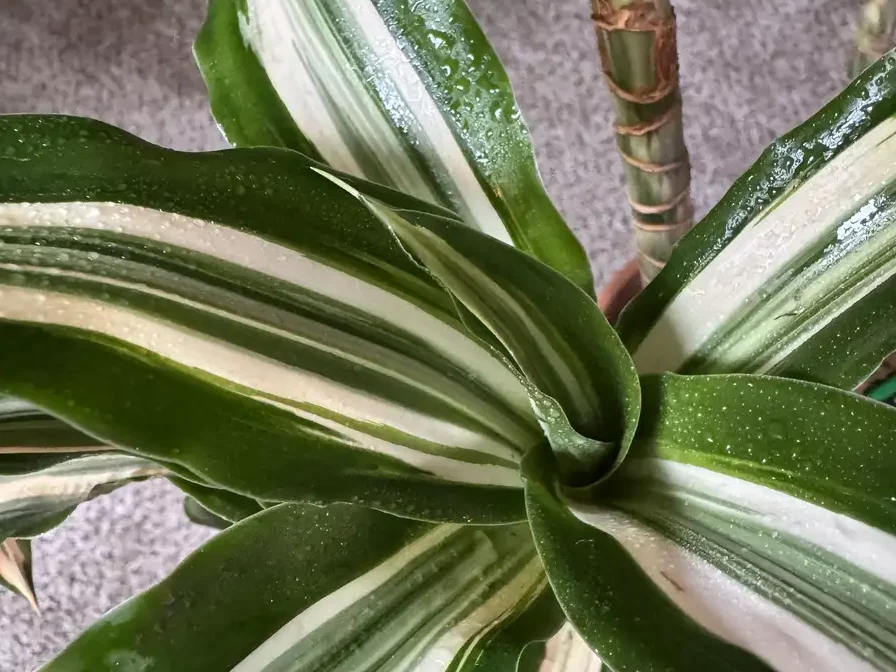
Known botanically as Dracaena deremensis, the cultivar ‘White Jewel’ traces its origins to the eastern regions of tropical Africa, particularly Tanzania and Mozambique. In these areas, wild Dracaenas grow beneath the canopy of moist forests, developing upright canes and lance-shaped leaves adapted to indirect light and variable humidity. While not traditionally as symbolically central as some other tropical plants, Dracaenas—including Warneckii types—have become associated with clarity, balance, and protection in many African spiritual practices. Their durability and symmetrical growth pattern often make them symbols of calm strength—plants you can count on. Historically, they were also used as boundary markers and planted near homesteads to denote care and domestic balance.
The ‘White Jewel’ cultivar brings that quiet stability into modern homes. With dark green leaves edged in crisp, silvery-white stripes, its foliage has a sculptural, architectural feel—almost like folded paper or soft marble. Unlike faster-growing varieties, it grows at a more deliberate pace, making it ideal for smaller spaces or curated interiors. Indoors, it typically reaches 2 to 3 feet (60 to 90 centimeters) in height, maintaining a compact, upright form with minimal fuss. It thrives in indirect light and asks very little in return—making it a true companion for anyone who enjoys plants with quiet presence and dependable rhythm. It feels timeless—never flashy, always grounded.
Fertilizing Dracaena Indoors (The Easy Way)
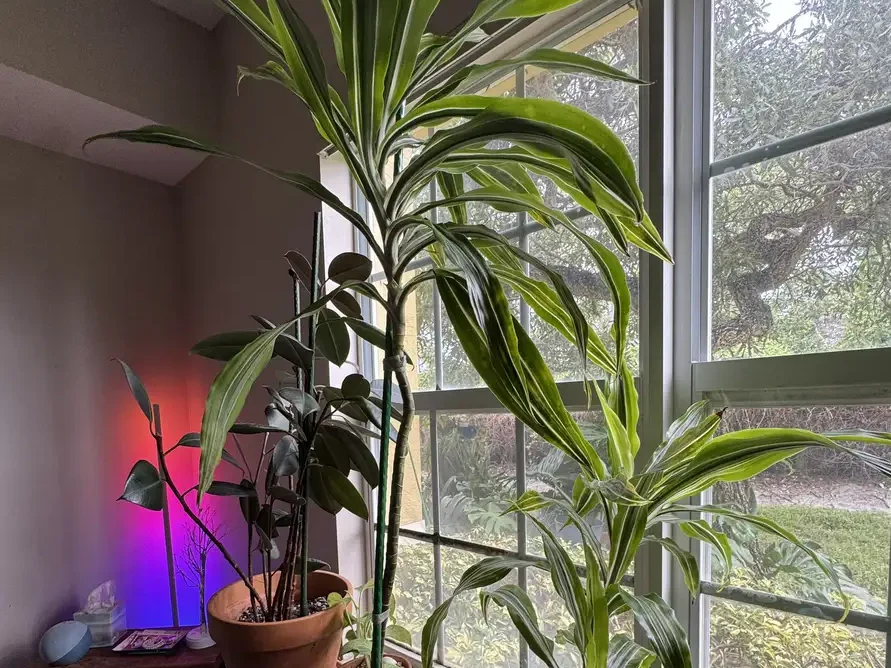
Fertilizing doesn’t have to be complicated. For my Dracaena Lemon Lime and White Jewel, I use slow-release fertilizer sticks that keep things low-maintenance and consistent. You don’t have to measure liquids or remember a schedule—just insert a stick into the soil every few months, and the plant takes what it needs.
This has worked especially well in indoor conditions, where growth is slower and more controlled. I’ve found that using these sticks helps keep the leaves vibrant and the root system healthy. You can find the exact ones I use Jobe’s 5001T Houseplant Fertilizer Food Spikes, 50 Pack on Amazon.
As an Amazon Associate, I earn from qualifying purchases. There’s no extra cost to you—just a helpful way to support the site and plants
Understanding the Growing Season
For most places, the growing season means spring through early fall. That’s when the plant puts out new leaves and benefits from extra nutrients.
For South Florida:
The weather is warm and bright year-round, these Dracaenas grow more consistently. I still give them a rest period in winter, but they never fully stop growing.
During the active months, I rely on slow-release fertilizer sticks. Just pop one into the soil every three or four months and let it do its thing. No liquid mixing, no second guessing.
Watering Tips and Root Rot Prevention
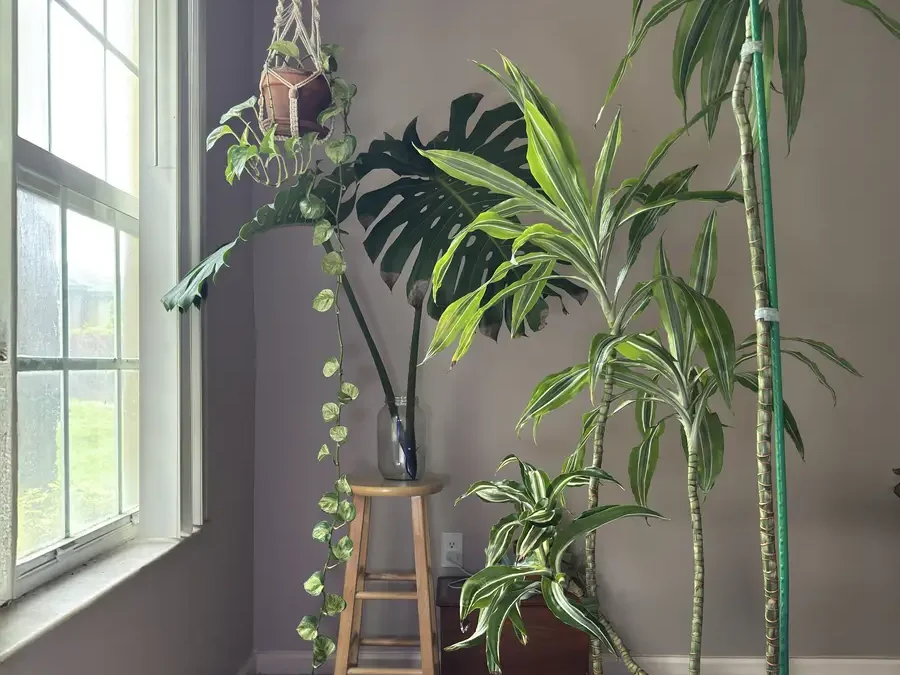
Here’s the golden rule: don’t overwater. These plants store moisture in their thick stems and will rot quickly if left in soggy soil. I water mine only when the top inch or so of soil feels dry. It’s always better to wait than to overdo it. And make sure your pot has drainage—these aren’t fans of wet feet.
Air-Purifying Benefits
Here’s a bonus: both Dracaenas are known for helping purify indoor air. NASA included them in its famous clean air study, noting their ability to filter common household toxins like formaldehyde, benzene, and trichloroethylene. While they’re not a replacement for a HEPA filter, they do offer a gentle, natural boost to indoor air quality—and they look good doing it.



 Sansefuria