
Bringing Sunlight Indoors: Our Experience with LED Grow Lights
In our home, we’ve moved beyond depending solely on sunlight through windows. Instead, we’ve carved out indoor plant areas powered by grow lights. Modern grow lights are designed to make this transition seamless. LED fixtures deliver efficient illumination without driving up energy bills. Full-spectrum panels replicate natural sunlight, helping plants thrive year-round.
Adjustable lamps let you support seedlings, maturing plants, and flowering stages with one light. Many models even come with timers that automate light cycles, ensuring consistency. Smaller spaces benefit from clip-on lights, while hydroponic gardeners often use specialized overhead systems. No matter your setup, the key is matching light to your plant type, space, and growth goals.
Indoor grow lights bridge the gap between what nature provides and what indoor conditions lack. They mimic the sun, stimulate healthy growth, and give us flexibility. But with so many wattages, spectrums, and features, it’s easy to feel overwhelmed. This guide breaks it all down.
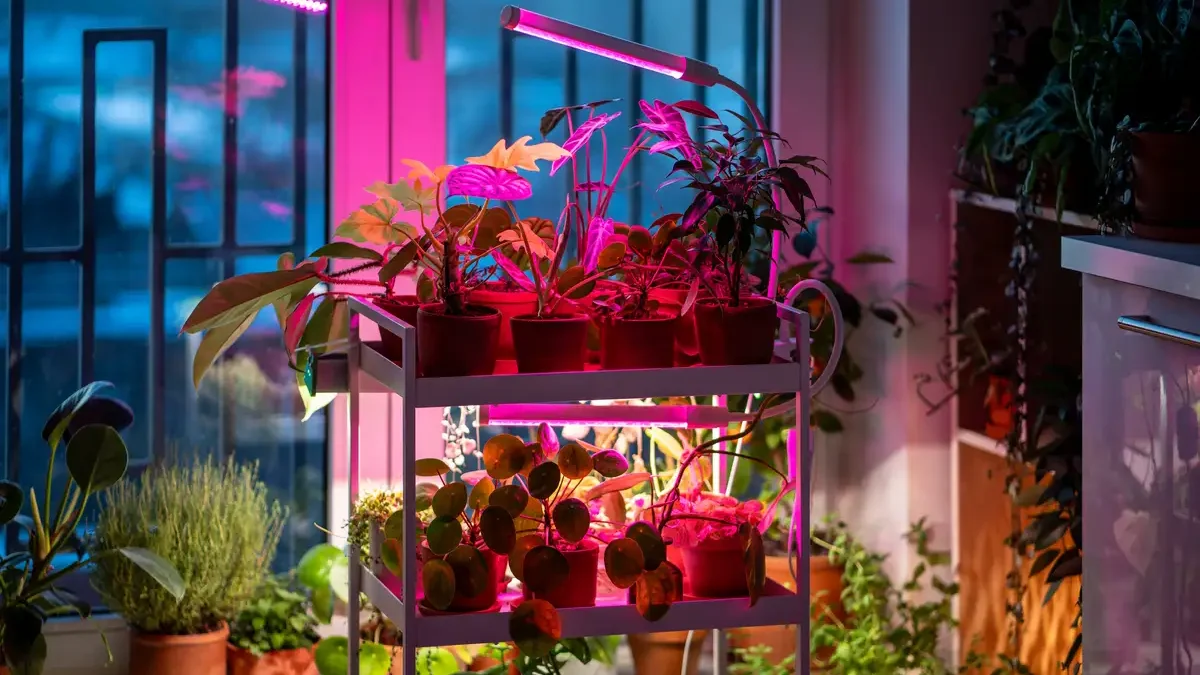
Wattage: 49W vs. 75W vs. 100W
Why Wattage Matters
Wattage measures how much power a grow light consumes. It’s not a perfect measure of brightness, but it does indicate intensity and coverage. The higher the wattage, the greater the light output—ideal for more demanding or larger plants.
49W Grow Light
- Best For: Small setups like herbs, pothos, or a single sansevieria.
- Functionality: Gentle, energy-efficient, and easy to position close to plants without burning them.
- Impact: Perfect for low-light tolerant plants or starter herbs.
75W Grow Light
- Best For: A small cluster of herbs (basil, oregano, parsley) and medium foliage plants such as philodendrons, dracaena, or grouped succulents.
- Functionality: Stronger canopy coverage than 49W, balanced for medium collections.
- Impact: Encourages steady vegetative growth and supports mild flowering indoors.
100W Grow Light
- Best For: Larger collections or demanding species like colocasia or staghorn ferns (platycerium).
- Functionality: Provides deep penetration for thick foliage and light-hungry flowering plants.
- Impact: Delivers strong photosynthesis support but requires careful placement due to heat and higher energy use.
Takeaway
Match wattage to both plant type and setup size. For decorative houseplants, 49W–75W is usually enough. For flowering species or tropical plants, 100W is a better investment.
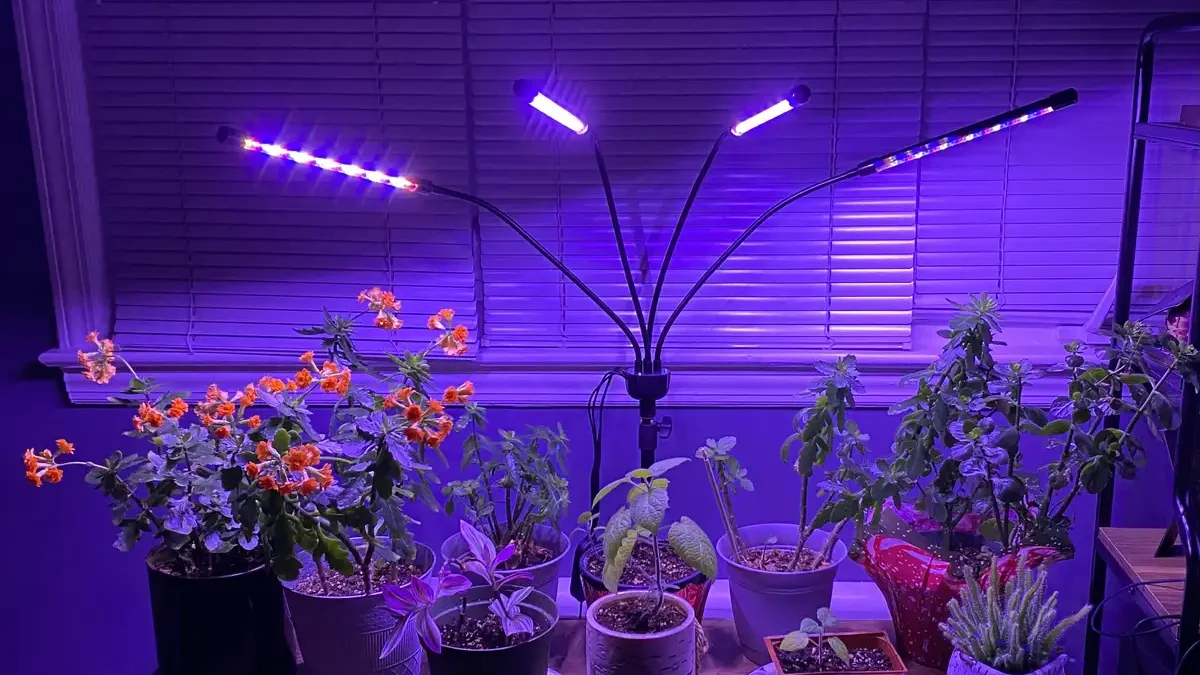
Light Spectrum: Warm White vs. Red & Blue
Plants respond differently to wavelengths than we do. That’s why spectrum is crucial.
Warm White Light
- Purpose: Broad-spectrum light that closely mimics daylight.
- Best For: Decorative foliage such as aglaonema, ZZ plants (zamioculcas zamiifolia), and most Araceae species.
- Human Impact: Easy on the eyes—great for shared living spaces.
Red & Blue Light (RB Spectrum)
- Purpose: Blue wavelengths support leafy growth; red wavelengths trigger flowering and fruiting.
- Flowering plants like marigolds or foliage that needs a boost, including euphorbia and cereus succulents.
- Human Impact: Harsh in appearance—best used in plant-specific rooms or with scheduled timers.
Full-Spectrum White with RB Boost
- Purpose: Combines natural appearance with targeted growth benefits.
- Best For: Mixed collections—think herbs alongside crassula, or trailing epipremnum.
Takeaway
If plants live in your living room or bedroom, warm white is friendlier. If you’re maximizing growth or blooms, red/blue is more effective.
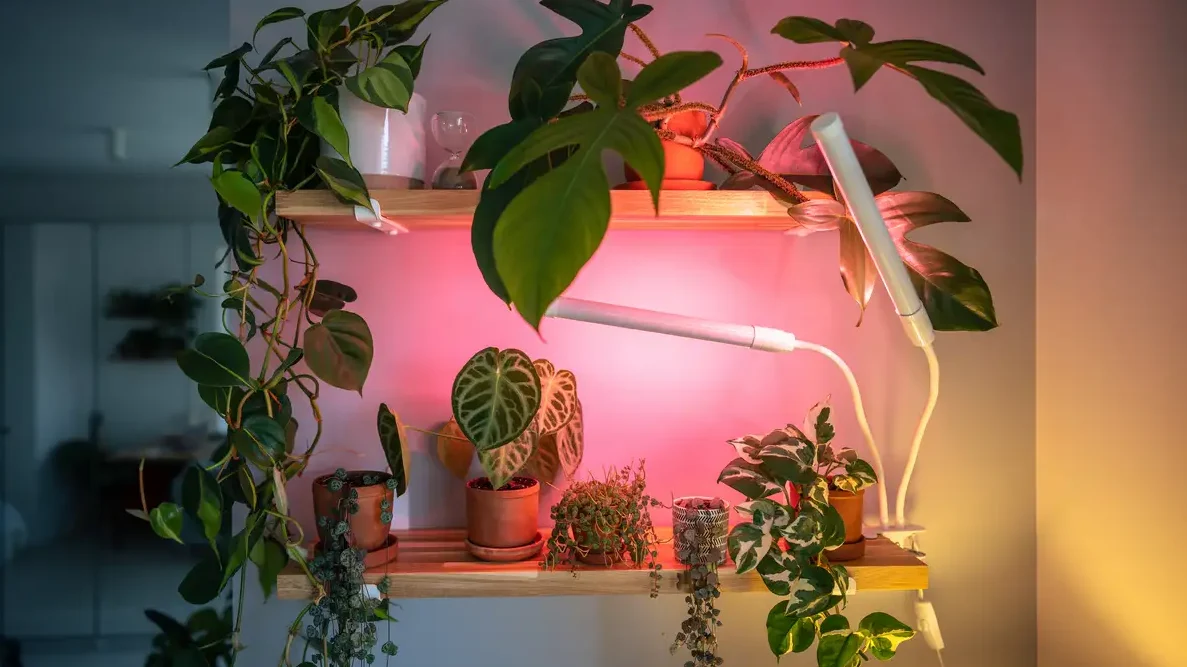
Pros and Cons of Indoor Grow Lights
Pros
- Year-Round Growth: Fresh herbs even in winter.
- Custom Control: Adjust cycles for seedlings, flowering plants, or established greenery.
- Improve health: Succulents maintain compact growth instead of stretching.
- Flexible placement: Foliage like dracaena can thrive even in low-light corners.
- Healthier Plants: Reduces legginess, improves color, and promotes blooms.
Cons
- Energy Cost: Higher wattage equals higher bills.
- Heat: Strong fixtures may dry soil or scorch leaves.
- Visual Appeal: Red/blue lights can clash with home décor.
- Maintenance: Bulbs and panels need regular cleaning and occasional replacement.
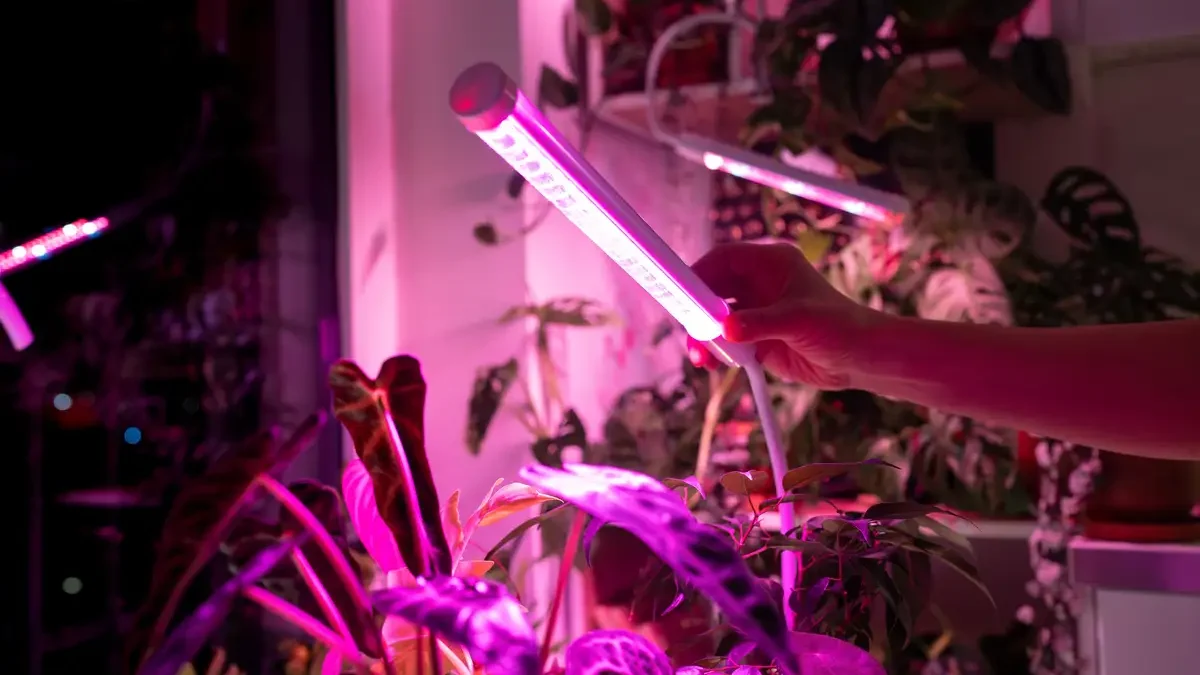
How Grow Lights Affect Humans
Grow lights aren’t just about plants—they change our living environment. Warm white lights blend naturally into home settings, creating cozy brightness. Red/blue lights, though effective, can disrupt sleep cycles or feel uncomfortable for long exposure.
Energy usage also plays a role. Running a 100W grow light for 12 hours daily adds up quickly. That’s why many households balance comfort and efficiency by using full-spectrum white in living areas and higher-output RB lights only in plant-dedicated spaces.
Plant-Specific Examples
- Herbs (Basil, Oregano, Parsley): Thrive under 75W full-spectrum.
- Sansevieria: Low-maintenance, happy under 49W warm white.
- Epipremnum & Philodendron: Prefer steady, medium output—75W is ideal.
- Succulents like crassula, cereus, aloiampelos: Respond well to targeted red/blue light to prevent legginess.
- Aglaonema & ZZ plants: Tolerant and versatile under warm white spectrum.
- Platycerium: Loves overhead placement with stronger wattage.
Choosing the Right Light for Your Setup
- Small shelf (pothos, herbs, sansevieria): 49W warm white.
- Medium table (philodendron, succulents, aglaonema): 75W with RB boost.
- Larger corner (colocasia, platycerium): 100W full-spectrum overhead.
- Living spaces (ZZ plant, dracaena): Warm white full-spectrum—easy on the eyes.
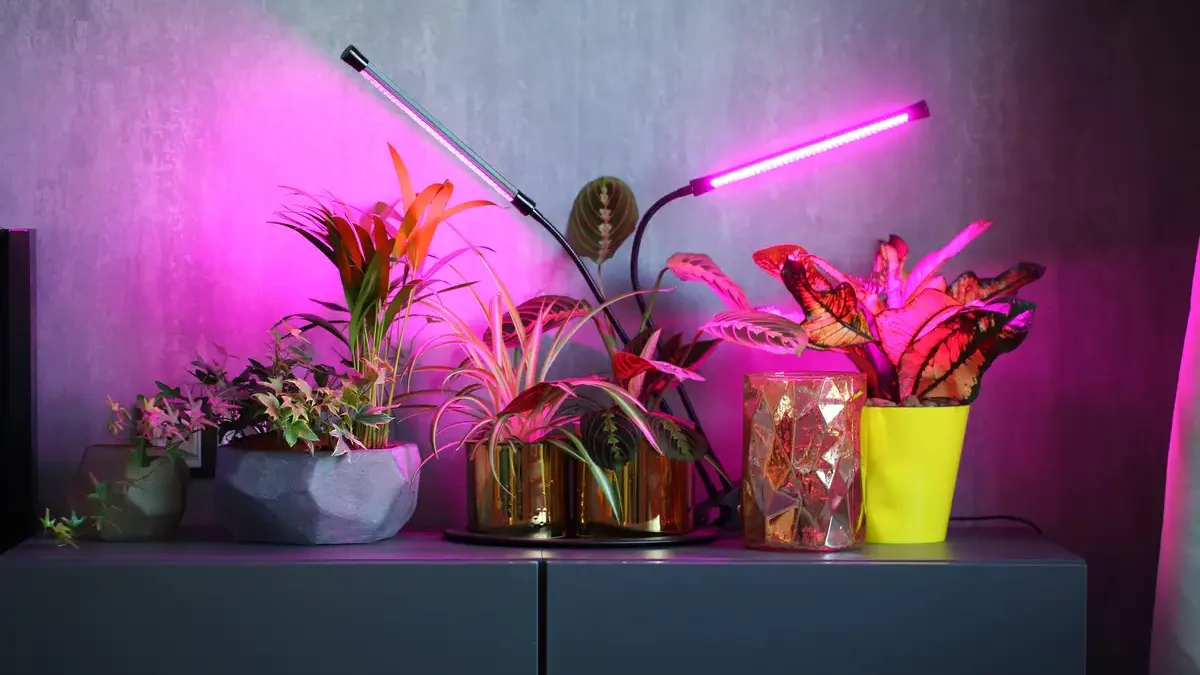
My Personal LED Grow Light Picks
If you’re considering grow lights for your own home, here are three options worth exploring:
- 49W / 75W / 100W Adjustable LED Grow Light
- Full-Spectrum Warm White vs. Red & Blue Grow Light
- Compact Indoor Grow Light Alternative
- Surge Protector Power Strip (2100J), Anker 12 Outlets with 1 USB C and 2 USB Ports
Affiliate Disclaimer:
As an Amazon Associate, I earn from qualifying purchases. This means if you click a link and buy, I may receive a small commission—at no extra cost to you. Prices remain the same for you; Amazon provides the commission. These small earnings help support creating more detailed guides like this one.


 Sansefuria